
Government on Thursday accused Congress of being "irresponsible" for not allowing Home Minister Rajnath Singh to make a statement in Rajya Sabbha on the Gurdaspur terrorist attack, which it said had originated from Pakistan.

December 3, 2021 marks 50 years since the beginning of the 1971 War which ended in a decisive military victory for India and the liberation of Bangladesh. Most analysts of the 1971 War agree that the IV Corps dash across the mighty Meghna river led by the brilliant General Sagat Singh was the turning point in the war, recalls military historian Colonel Anil A Athale (retd).
'China has forcibly occupied territory it had never occupied before, blocked Indian patrols' access to areas they had patrolled for decades and, most provocatively, killed 20 Indian soldiers.' 'Most countries would regard these as acts of war.' 'New Delhi has apparently taken off the table the option of evicting the PLA with force,' observes Ajai Shukla.

Mattis said that there are operations by the Pakistan military that are helping the US' ongoing efforts against terrorism and have been for some time.

'China is constantly probing India's weaknesses.' 'The challenge is to implement a strategy that will allow India to buy time, gather its strength, and eventually counter China,' recommends Harsh V Pant and Vinay Kaura.

'Hedging has become inevitable in the emerging global scenario and we too should have our share of hedging. But it has to be combined with firm positions and sturdy alliances wherever necessary,' says T P Sreenivasan.
'A breakthrough in eastern Ladakh leading to disengagement and creation of a buffer zone will obviate the need of military deployment through the winter months ahead,' notes Ambassador M K Bhadrakumar.

The world is seeing an "explosion" in seizures of power by force and military coups are back, UN Secretary General Antonio Guterres told world leaders on Tuesday, lamenting that geopolitical divisions are undermining international cooperation as he called for strengthening global governance and re-igniting multilateralism.

'Wherever in the world there is political instability, those countries are beset with severe crises today. But India is in a much better position than the rest of the world due to the decisions taken by my government in the national interest,' President Droupadi Murmu said in her address to both Houses of Parliament.
Amid a diplomatic row over alleged links between Inter-Services Intelligence and terror groups, a top American Senator has said that the United States needs to have "all options" on the table if Pakistan does not abandon the policy of embracing terrorism as part of its national strategy.

'I am not minimising either the seriousness or the complex nature of the current situation.' 'Naturally, we have to do what it takes to secure our borders.' 'We are talking to the Chinese, both through military channels and diplomatic ones.'
'In fact, they work in tandem.' 'When it comes to finding a solution, this must be predicated on honouring all agreements and understandings.' 'And not attempting to alter the status quo unilaterally.'

'There are three pillars of concern: The expansion of Hindu majoritarianism, the concentration of executive power and decay of independent institutions, and curbs on free expression and dissent.'

'Neither will China -- at least for now -- because its troops are deployed in equal strength.' 'We are negotiating at equal terms right now and it's a game of patience.'

'It is a testing time for our foreign policy which may involve a certain element of taking risks, assessing costs, and expecting failures,' asserts Commodore Venugopal Menon (retd).
A closure of the Indian mission in Kabul will be a Himalayan blunder at this historic juncture when the wheels of diplomacy and politics are set to accelerate in Afghanistan, argues Ambassador M K Bhadrakumar

'We can expect heightened belligerence from China.'
'China is likely to help Pakistan in keeping the fire burning in J&K to bleed India for its own interests.' A fascinating excerpt from Lieutenant General K Himalay Singh's Making of a General: A Himalayan Echo.

India cannot choose its geography and devise regional strategies to dovetail into the Western Indian Ocean hypothesis conceived in the Pentagon, argues Ambassador M K Bhadrakumar.

'The crisis has strengthened America's resolve to work towards building its relationship with India as a bulwark against Chinese aggression'

Ambassador Natarajan Krishnan and Ambassador Shankar Bajpai helped shape Indian foreign policy at a glorious, but difficult, time in history, recalls Ambassador T P Sreenivasan.

'The Chinese can't be trusted hence the need to verify and re-verify.'
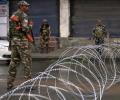
All things taken into consideration, the Taliban statement on Kashmir portends trouble ahead. The Taliban is notorious for doublespeak and when it says there is no link between the Kashmir issue and the Afghan settlement, the opposite must be taken into account as well, points out Ambassador M K Bhadrakumar.
'The leverage created by the Indian military must not be lost.'

Interestingly, in his entire remarks, Modi never once mentioned regional security, Ambassador M K Bhadrakumar points out.

India on Wednesday hailed the verdict of the International Court of Justice in the Kulbhushan Jadhav case

The agenda of the talks will be to firm up a roadmap for disengagement of troops from all the friction points in eastern Ladakh, the sources said.
Obama Administration's top diplomat for Afghanistan and Pakistan Richard Holbrooke, who has already visited New Delhi twice to brief Indian leaders of President Obama's AfPak strategy, on Tuesday said that due to elections India had not gotten fully engaged in the regional approach that is an integral part of the US strategy.
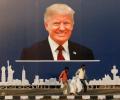
'It's the first-ever US presidential visit which is specially planned for India.' 'The standalone visit itself has achieved something already. Don't underestimate it.' Sheela Bhatt gives us an exclusive glimpse of what the Modi government hopes to achieve from Trump's visit.

The statement came a day after Indian Army launched "punitive fire assaults" on Pakistani positions across LoC.

US Secretary of State Micheal Pompeo and Secretary of Defence James Mattis will travel to New Delhi next month for the 2+2 dialogue.
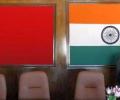
As the border standoff entered the sixth month, an early resolution to the row appeared dim with close to 100,000 Indian and Chinese troops remaining deployed in the high-altitude region and showing readiness for a long-haul. There is no official word on the talks yet but sources said the agenda was to finalise a roadmap for disengagement of troops from all the friction points.
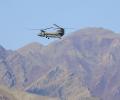
'Our strategy should be to 'hold the line' in the north on the Sino-Indian land frontier, but maintain and, if possible, enlarge India's current edge in the maritime south.'

Notwithstanding how the current impasse is solved, at some point in the future, Russia will realise that just as centuries ago it developed the paradigm of securing its heartland's safety through annexing vast buffer zones between itself and the enemy, a more modern security is possible only through friendly relations and sustainable peace, observes Shyam G Menon.

The United States has announced to reduce the number of American troops in Afghanistan and Iraq to 2,500 each by January 15 next year, which drew sharp reaction from influential lawmakers across the aisle.

New Delhi should resist any temptation to act as spoiler and instead should cooperate with its SCO partners in reaching a regional consensus behind the formation of an interim government in Kabul, argues Ambassador M K Bhadrakumar.
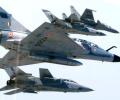
'With the Balakot strike, India has now established a precedent for response to any new terrorist attack engineered by Pakistan.' 'This will stay irrespective of who wins the coming elections,' says Colonel Anil A Athale (retd).
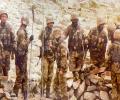
External Affairs Minister S Jaishankar said on Wednesday China has given India 'five differing explanations' for deploying large forces at the Line of Actual Control (LAC), adding this violation of bilateral pacts has 'very significantly damaged' their relationship that is now at its 'most difficult phase' in the last 30-40 years.

'India imports 70 per cent of its bulk drugs from China. Are we going to live without antibiotics?' asks Debashis Basu.

'The Kashmir issue has become internationalised after nearly half a century.' 'India, not Pakistan, has done so pro-actively,' says Shekhar Gupta.
